Open Letter to WHO: Hantavirus Outbreak
Editorial Note (May 8, 2026): This letter was sent to the World Health Organization on May 7, 2026. After this letter was sent, we found that the World Health Organization press release had been updated to replace “droplet precautions” with “transmission-based precautions during close contact.” The guidance, however, still does not recommend airborne precautions or respirator use (e.g., N95 respirators), and continues to recommend “medical masks.”
Dear Colleagues at the World Health Organization,
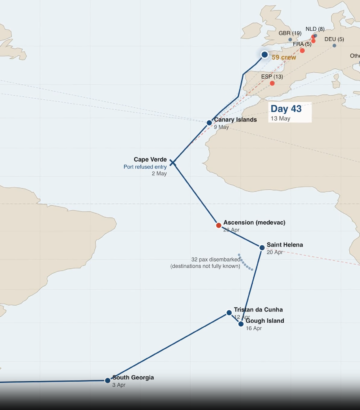
The present letter concerns the hantavirus outbreak onboard the MV Hondius cruise ship, and more particularly the World Health Organization press release regarding the practices to adopt in view of this outbreak (hereinafter the “Press Release”).
We express concern regarding the insufficiency of the precautionary measures described in the Press Release to control the potential spread of the virus. Sequencing has now confirmed that the virus involved is Andes hantavirus, a strain associated with documented human-to-human transmission. In order to reduce risk both to the general population and to those onboard the ship, heightened precautions should be adopted beyond those articulated in the Press Release.
- The Press Release states: “If respiratory symptoms are present to practice respiratory etiquette and wear a medical mask.”
- This does not account for the possibility of presymptomatic transmission during the prolonged incubation period associated with Andes virus infection. Published investigations of Andes virus outbreaks have identified transmission events occurring at or near symptom onset, raising concern that infectiousness may precede recognition of illness;
- In addition, aerosol or airborne transmission has not been ruled out and should therefore be accounted for in infection control measures, particularly given the high mortality associated with Andes hantavirus infection. Respirator use, not medical masks, is the appropriate standard to protect staff, passengers, and the general population, and to mitigate possible aerosol transmission;
- Finally, “respiratory etiquette” is not an adequate protective measure for a severe infectious disease associated with documented human-to-human transmission, regardless of the precise mechanism of transmission. The term is also vague and open to interpretation, and should be replaced with clear, specific guidance regarding effective protective measures.
- The Press Release states: “Standard precautions combined with droplet precautions during close contact are considered sufficient.”
- Given confirmed Andes hantavirus infection, documented human-to-human transmission, and the high mortality associated with the disease, protection against airborne transmission should be adopted in healthcare settings;
- The WHO is requested to provide the scientific basis for its conclusion that “standard precautions” and droplet precautions alone are sufficient in the context of this outbreak. If respiratory aerosol transmission has not been excluded, the WHO’s recommendations are insufficient to adequately protect healthcare workers, passengers, and the public.
- As inhalation of aerosolized rodent excreta is a recognized route of hantavirus transmission, we further urge the WHO to recommend measures to mitigate toilet plume contamination. Toilet flushing generates aerosol plumes which, if infectious virus is present following toilet use by an infected individual, may contribute to human-to-human transmission, particularly in poorly ventilated indoor spaces. Adding appropriate disinfectants prior to flushing may help reduce this risk.
Respectfully submitted,
Yaneer Bar-Yam
for the World Health Network Core Action Group
References:
1. Press Release, WHO May 4, 2026: https://www.who.int/emergencies/disease-outbreak-news/item/2026-DON599
2. Andes Virus information: Martínez, V. P. et al. (2020). “Super-spreaders” and person-to-person transmission of Andes virus in Argentina. New England Journal of Medicine, 383(23), 2230–2241. https://www.nejm.org/doi/full/10.1056/NEJMoa2009040
Versión en español / Spanish translation
Carta abierta a la OMS: Brote de hantavirus
Nota editorial (8 de mayo de 2026): Tras el envío de esta carta, descubrimos que el comunicado de prensa de la Organización Mundial de la Salud se había actualizado para sustituir “precauciones contra las gotitas” por “precauciones basadas en la transmisión durante el contacto cercano”. Sin embargo, las directrices siguen sin recomendar precauciones contra la transmisión aérea ni el uso de respiradores (por ejemplo, respiradores N95), y continúan recomendando “mascarillas médicas”.
Estimados colegas de la Organización Mundial de la Salud:
La presente carta se refiere al brote de hantavirus a bordo del crucero MV Hondius, y más particularmente al comunicado de prensa de la Organización Mundial de la Salud sobre las medidas que deben adoptarse ante este brote (en adelante, el “Comunicado de Prensa”).
Expresamos nuestra preocupación por la insuficiencia de las medidas preventivas descritas en el Comunicado de Prensa para controlar la posible propagación del virus. La secuenciación ha confirmado que el virus implicado es el virus de los Andes, una cepa asociada a la transmisión documentada de persona a persona. Para reducir el riesgo tanto para la población general como para las personas a bordo del barco, se deben adoptar precauciones adicionales a las indicadas en el Comunicado de Prensa.
- El Comunicado de Prensa indica: “Si presenta síntomas respiratorios, practique la higiene respiratoria y use una mascarilla médica”.
- Esto no tiene en cuenta la posibilidad de transmisión presintomática durante el prolongado período de incubación asociado con la infección por el virus de los Andes. Las investigaciones publicadas sobre brotes del virus de los Andes han identificado eventos de transmisión que ocurren al inicio de los síntomas o cerca de ellos, lo que genera preocupación de que la infecciosidad pueda preceder al reconocimiento de la enfermedad;
- Además, no se ha descartado la transmisión por aerosoles o vía aérea y, por lo tanto, debe tenerse en cuenta en las medidas de control de infecciones, especialmente dada la alta mortalidad asociada con la infección por el hantavirus andino. El uso de respiradores, no de mascarillas médicas, es el estándar apropiado para proteger al personal, a los pasajeros y a la población en general, y para mitigar la posible transmisión por aerosoles;
- Finalmente, la “etiqueta respiratoria” no constituye una medida de protección adecuada para una enfermedad infecciosa grave asociada a la transmisión documentada de persona a persona, independientemente del mecanismo de transmisión preciso. El término también es vago y está abierto a interpretación, y debería sustituirse por directrices claras y específicas sobre medidas de protección eficaces.
- El comunicado de prensa afirma: “Se considera que las precauciones estándar combinadas con las precauciones contra la transmisión por gotitas durante el contacto cercano son suficientes”.
- Dada la confirmación de la infección por hantavirus de los Andes, la transmisión documentada de persona a persona y la alta mortalidad asociada a la enfermedad, se deben adoptar medidas de protección contra la transmisión aérea en los centros sanitarios;
- Se solicita a la OMS que proporcione la base científica de su conclusión de que las “precauciones estándar” y las precauciones contra la transmisión por gotitas son suficientes por sí solas en el contexto de este brote. Si no se ha descartado la transmisión por aerosoles respiratorios, las recomendaciones de la OMS son insuficientes para proteger adecuadamente a los trabajadores sanitarios, los pasajeros y el público en general.
- Dado que la inhalación de excrementos de roedores en aerosol es una vía reconocida de transmisión del hantavirus, instamos además a la OMS a que recomiende medidas para mitigar la contaminación procedente de los inodoros. Tirar de la cadena del inodoro genera nubes de aerosol que, si hay virus infecciosos presentes después de que una persona infectada haya usado el inodoro, pueden contribuir a la transmisión de persona a persona, especialmente en espacios interiores mal ventilados. Agregar desinfectantes adecuados antes de tirar de la cadena del inodoro puede ayudar a reducir este riesgo.
Atentamente,
Yaneer Bar-Yam
en nombre del World Health Network Core Action Group
Referencias:
1. Press Release, WHO May 4, 2026: https://www.who.int/emergencies/disease-outbreak-news/item/2026-DON599
2. Andes Virus information: Martínez, V. P. et al. (2020). “Super-spreaders” and person-to-person transmission of Andes virus in Argentina. New England Journal of Medicine, 383(23), 2230–2241. https://www.nejm.org/doi/full/10.1056/NEJMoa2009040
Version française / French translation
Lettre ouverte à l’OMS : éclosion de virus Andes
Note de la rédaction (8 mai 2026) : Cette lettre a été transmise à l’Organisation mondiale de la Santé le 7 mai 2026. Après son envoi, nous avons constaté que le communiqué de presse de l’OMS avait été mis à jour : l’expression « précautions contre les gouttelettes » a été remplacée par « précautions basées sur le mode de transmission lors de contacts étroits ». Toutefois, les recommandations ne préconisent toujours pas de précautions contre les aérosols ni l’utilisation de masques bien ajustés (N95, FFP2 ou mieux), et continuent de recommander le port de « masques médicaux ».
Chers et chères collègues de l’Organisation mondiale de la Santé,
La présente lettre concerne l’éclosion de virus des Andes sur le paquebot de croisière MV Hondius, et plus particulièrement le communiqué de presse de l’Organisation mondiale de la Santé relatif aux mesures à adopter dans le cadre de cette éclosion (ci-après le « communiqué »).
Nous souhaitons exprimer nos préoccupations quant au caractère insuffisant des mesures de précaution décrites dans ce communiqué pour contenir la propagation potentielle du virus. Le séquençage a désormais confirmé qu’il s’agit du virus Andes, une souche associée à des cas documentés de transmission interhumaine. Afin de réduire les risques tant pour la population générale que pour les personnes à bord du navire, des mesures de protection renforcées devraient être mises en place, au-delà de celles mentionnées dans le communiqué.
1. Le communiqué indique : « En présence de symptômes respiratoires, adoptez les règles d’hygiène respiratoire et portez un masque médical. »
- Cette recommandation ne tient pas compte de la possibilité d’une transmission présymptomatique durant la période d’incubation prolongée associée à l’infection par le virus Andes. Des études publiées portant sur des éclosions de virus Andes ont mis en évidence des événements de transmission survenant au moment de l’apparition des symptômes ou peu avant, ce qui soulève la possibilité que la contagiosité précède la reconnaissance de la maladie.
- Par ailleurs, la transmission par aérosols ou par voie aérienne n’a pas été écartée et devrait donc être prise en compte dans les mesures de contrôle des infections, en particulier compte tenu de la forte mortalité associée à l’infection par le virus Andes. Le recours à des masques bien ajustés (N95, FFP2 ou mieux), et non à des masques médicaux, constitue la norme appropriée pour protéger le personnel, les passagers et la population générale, et pour atténuer un éventuel risque de transmission par aérosols.
- Enfin, les « règles d’hygiène respiratoire » ne constituent pas une mesure de protection suffisante pour une maladie infectieuse grave associée à une transmission interhumaine documentée, quel que soit le mécanisme précis de transmission. Ce terme est également vague et sujet à interprétation, et devrait être remplacé par des recommandations claires et précises concernant des mesures de protection efficaces.
2. Le communiqué indique : « Les précautions standard, combinées à des précautions contre les gouttelettes lors de contacts étroits, sont jugées suffisantes. »
- Compte tenu des infections par le virus Andes confirmées, de la transmission interhumaine documentée et de la forte mortalité associée à la maladie, des mesures de protection contre la transmission aérienne devraient être adoptées en milieu de soins.
- Nous demandons à l’OMS de fournir les bases scientifiques sur lesquelles repose la conclusion selon laquelle les « précautions standard » et les précautions contre les gouttelettes seraient suffisantes dans le contexte de cette éclosion. Si une transmission par aérosols n’a pas été exclue, les recommandations de l’OMS sont insuffisantes pour protéger de manière adéquate les travailleurs de la santé, les passagers et la population.
3. Par ailleurs, l’inhalation d’aérosols issus d’excréments de rongeurs étant une voie reconnue de transmission des hantavirus, nous exhortons également l’OMS à recommander des mesures visant à réduire la contamination par aérosols liée à la chasse d’eau. Tirer la chasse d’eau génère des aérosols qui, en présence de virus infectieux après le passage d’une personne infectée, pourraient contribuer à la transmission interhumaine, en particulier dans des espaces intérieurs mal ventilés. L’ajout d’un désinfectant approprié avant le rinçage pourrait contribuer à réduire ce risque.
Respectueusement,
Yaneer Bar-Yam
pour le groupe central d’action du Réseau mondial de la Santé
Références :
1. OMS, Communiqué de presse du 4 mai 2026 : https://www.who.int/emergencies/disease-outbreak-news/item/2026-DON599
2. Renseignements sur le virus Andes : Martínez, V. P. et al. (2020). “Super-spreaders” and person-to-person transmission of Andes virus in Argentina. New England Journal of Medicine, 383(23), 2230–2241. https://www.nejm.org/doi/full/10.1056/NEJMoa2009040