The Current Andes Hantavirus Situation in Argentina (May 2026)
May 14, 2026
Authors: Ifrah Ahmad, Yaneer Bar-Yam
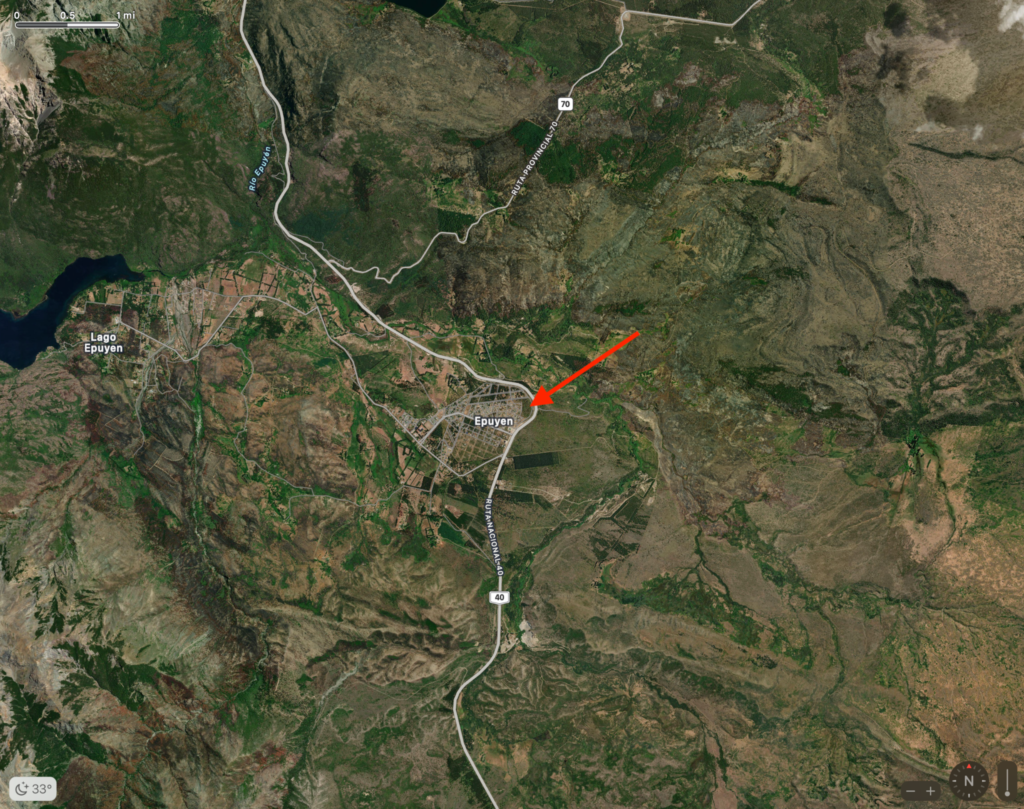
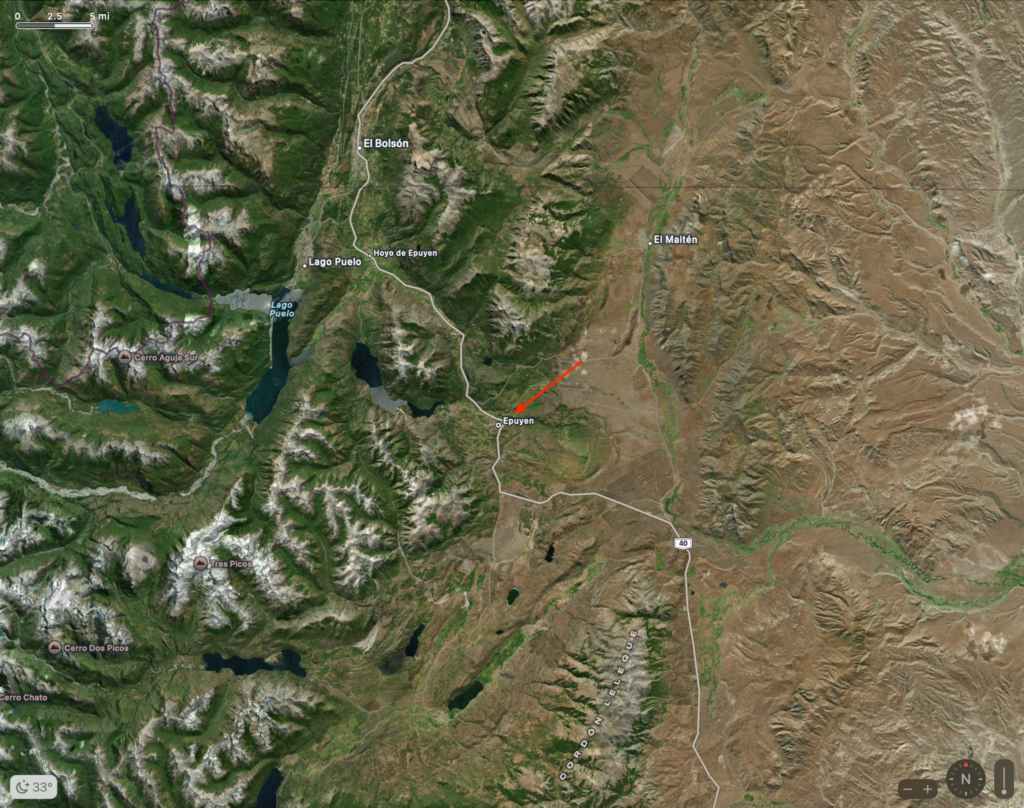
Figure: The well-studied 2018–2019 Andes hantavirus outbreak in Epuyén, Argentina [7] resulted in 34 cases and 11 deaths associated with superspreader events in a town of only 1,749 people located in the rural Andes mountain foothills (red arrows). Recent spread of Andes virus cases into Buenos Aires (~14 million people) increases the risk of larger local outbreaks and global spread through transportation networks.
Argentina is experiencing a significant increase in Andes virus activity, including expansion into more populated regions and increasing mortality. Historically, outbreaks were concentrated in sparsely populated rural areas of the Andes mountain regions, limiting opportunities for large-scale spread. Expansion into more densely populated and globally connected cities increases the risk that local outbreaks can seed broader transmission networks. Unlike most hantaviruses, Andes virus is associated with established human-to-human transmission. The MV Hondius outbreak demonstrates how these factors can rapidly create risks of international spread, larger outbreaks, deaths, and broader societal disruption through modern transportation networks.
Recent reports indicate that Andes virus incidence and observed lethality in Argentina has risen substantially compared to previous years. Argentina records hantavirus cases by season, running from July of one year to the following June. There have been 101 cases thus far in the 2025-2026 season, compared to 57 in 2024-2025 and 75 in 2023-2024 [2] and an increase from 15.4% lethality over the past four years to 32% for cases that spanned most of 2025 [1]. Multiple sources report elevated activity in 2026. One Argentine Ministry of Health summary cited 41 confirmed cases so far in 2026 and stated incidence had exceeded the epidemic threshold [2]. Another report noted 42 cases in 2026, with “most” occurring in Buenos Aires Province [3].
Argentina has several endemic hantavirus regions:
- Patagonia (Chubut, Río Negro, Neuquén)
- Northwest (especially Salta)
- Central region including Buenos Aires Province
- Northeast (Misiones) [4]
A major concern raised by Argentine researchers is that cases are increasingly occurring outside the historically recognized rural Patagonia endemic zones. Buenos Aires, Argentina’s most populous province, currently has the largest total number of confirmed cases, while Salta has the highest incidence rate per population [4,5].
An important nuance is that Buenos Aires Province includes both dense metropolitan/peri-urban areas and extensive rural zones. Current reporting does not establish widespread urban person-to-person transmission in the urban area, but it does indicate expansion into much more densely populated regions than the earlier Patagonia outbreaks. Andes hantavirus cases appearing more frequently in more urban areas may affect the patterns and mechanisms of Andes virus transmission.
The increased rate of transmission and infection in the last 18 months is consistent with the recent rise in viral spread in more densely populated areas; if this continues, we could expect to see more frequent and larger outbreaks. As long as outbreaks were contained to rural endemic areas — isolated, small, low-density populations — natural limiting factors would keep the basic reproductive number (R0) low. However, as we see increasing spread in the urban/metropolitan or other more densely-populated situations, we can expect to see this pattern change. These risks locally and globally may also be further complicated by a 30% cut to the Argentine health budget, impacting epidemiological surveillance, and Argentina’s withdrawal from the WHO in March [5].
The Andes virus (ANDV) is the only hantavirus strain clearly associated with documented person-to-person transmission [6].
The key historical outbreak was the 2018–2019 Epuyén outbreak in Chubut Province:
- 34 confirmed cases
- 11 deaths
- estimated reproductive number before intervention: ~2.1
- documented superspreading events
- evidence compatible with aerosol transmission [7]
The NEJM study concluded that person-to-person transmission of Andes virus occurred and included multiple transmission generations [7].
Argentine researchers including Gustavo Palacios have emphasized that some transmission happened during ordinary social interaction and not solely during close and prolonged contact, and the outbreak required strong containment measures including quarantine, contact tracing, and isolation [8]. Similar information about ordinary social interactions leading to transmission are associated with the MV Hondius cruise ship outbreak [9]. Palacios also emphasized that the outbreak conditions studied in Patagonia were very different from conditions on a cruise ship. The Patagonia outbreak occurred in a sparsely populated rural region with substantial outdoor activity, whereas a ship inherently facilitates transmission [8].
The MV Hondius outbreak has drawn global attention. Andes virus has been confirmed in passengers, and three people have died [10]. The ship departed from Ushuaia, Argentina on April 1, 2026. Approximately 30 passengers dispersed internationally before the outbreak was recognized on April 14, while the majority were dispersed on May 10. While 8 cases were confirmed before the disembarkation on May 10, an additional 3 passengers tested positive during their flights to France, Spain and the United States.
A central scientific and public health question is what happens after potentially exposed individuals disperse internationally during the long incubation period that may extend to 45 days or longer [8]. Given the potential for increased transmission and a significantly high mortality rate, strong monitoring and containment of the virus is central to limiting its spread and risk to the general population. Effective quarantine of exposed individuals is essential. Hesitation by WHO and national public health agencies to take the kinds of actions that stopped the outbreak in Epuyén raise the risk of a much larger spread, increased deaths and societal disruption globally.
References
1. Epidemiological Alert Hantavirus Pulmonary Syndrome in the Americas Region, PAHO, Dec 2025. https://www.paho.org/sites/default/files/2025-12/2025-12-19-epidemiological-alert-hantavirus-engfinal_0.pdf
2. Unione Sarda. “Hantavirus: Argentina clarifies, 41 cases of infection have already been recorded in 2026.” May 2026. https://www.unionesarda.it/en/world/hantavirus-argentina-clarifies-41-cases-of-infection-have-already-been-recorded-in-2026-b26e90wh
3. CNN World. “ The country where lethal hantavirus cases are on the rise. Experts blame climate change.” May 9, 2026. https://www.cnn.com/2026/05/09/americas/hantavirus-cases-double-argentina-climate-change-latam-intl
4. FluTrackers / Argentine Ministry summaries discussed in: Avian Flu Diary. “Argentina MOH Statement and Special Bulletin.” May 2026. https://afludiary.blogspot.com/2026/05/argentina-moh-statement-and-special.html “So far this year, 42 new cases have been reported, and since the beginning of the season (epidemiological week 27 of 2025), the total number of confirmed cases has reached 101.”
5. El País. “El brote de hantavirus pone en la mira al gobierno de Milei…” May 2026. https://elpais.com/argentina/2026-05-06/el-brote-de-hantavirus-pone-en-la-mira-al-gobierno-de-milei-por-la-salida-de-la-oms-y-los-recortes.html “The biggest concern is that cases have begun to be detected outside the four endemic areas. This happens in the province of Buenos Aires, the largest and most populated in Argentina, where the virus has moved away from the river basins to spread to other areas.”
6. El País. “Así es el virus de los Andes, la única cepa de hantavirus que se transmite de persona a persona.” May 2026. https://elpais.com/salud-y-bienestar/2026-05-06/asi-es-el-virus-de-los-andes-la-unica-cepa-de-hantavirus-que-se-transmite-de-persona-a-persona.html
7. Martínez VP et al. “Person-to-Person Transmission of Andes Virus.” New England Journal of Medicine. 2020;383:2230–2241. https://www.nejm.org/doi/full/10.1056/NEJMoa2009040
8. El País interview with Gustavo Palacios. “Este patógeno es más virulento y puede haber contagios en cadenas.” May 7, 2026. https://elpais.com/ciencia/2026-05-08/gustavo-palacios-experto-en-hantavirus-este-patogeno-es-mas-virulento-y-puede-haber-contagios-en-cadenas.html
9. The Atlantic. “A Foundational Myth About Hantavirus.” May 12, 2026. https://www.theatlantic.com/ideas/2026/05/hantavirus-outbreak-cruise-ship/687140/
10. WHO Disease Outbreak News. “Andes hantavirus disease associated with cruise ship travel.” 2026. https://www.who.int/emergencies/disease-outbreak-news/item/2026-DON599
Version française / French translation
La situation actuelle liée au virus Andes en Argentine (mai 2026)
Le 14 mai 2026
Rédigé par : Ifrah Ahmad et Yaneer Bar-Yam
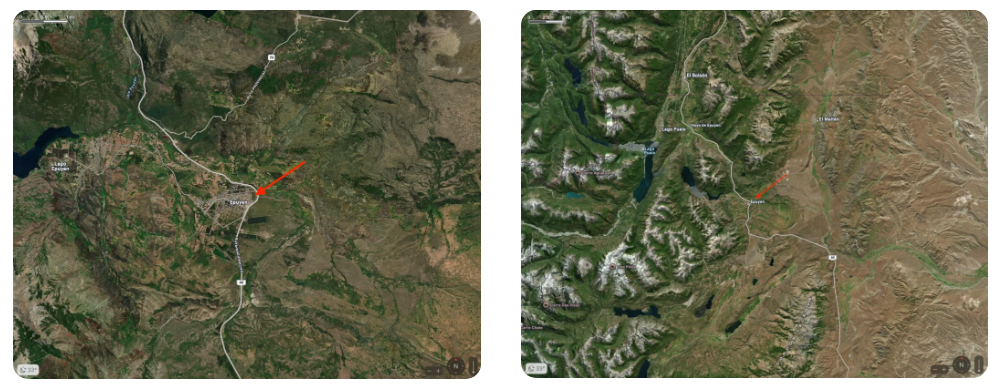
Figure : L’éclosion bien documentée de virus Andes survenue en 2018–2019 à Epuyén, en Argentine [7], a entraîné 34 cas et 11 décès liés à des événements de super-propagation dans une petite localité de seulement 1 749 habitants située au pied des Andes rurales (flèches rouges). La récente progression des cas de virus Andes vers Buenos Aires (environ 14 millions d’habitants) augmente le risque d’éclosions locales de plus grande ampleur et de propagation à l’échelle mondiale via les réseaux de transport.
L’Argentine connaît actuellement une recrudescence importante de l’activité du virus Andes, qui s’étend désormais à des régions plus peuplées et s’accompagne d’une augmentation de la mortalité. Historiquement, les éclosions se concentraient dans les zones rurales peu peuplées des régions andines, ce qui limitait les possibilités de propagation à grande échelle. Or, l’expansion du virus vers des villes plus densément peuplées et mieux connectées au reste du monde augmente le risque que des éclosions locales alimentent des réseaux de transmission plus étendus. Contrairement à la plupart des hantavirus, le virus Andes est associé à une transmission interhumaine documentée. L’éclosion sur le navire MV Hondius illustre comment ces facteurs peuvent rapidement créer des risques de propagation internationale, d’éclosions plus larges, de décès et de perturbations sociétales plus étendues par l’intermédiaire des réseaux de transport modernes.
Des rapports récents indiquent que l’incidence du virus Andes et la létalité observée des cas en Argentine ont fortement augmenté par rapport aux années précédentes. En effet, l’Argentine enregistre les cas de hantavirus par saison, de juillet d’une année à juin de l’année suivante. À ce jour, 101 cas ont été recensés pour la saison 2025–2026, contre 57 en 2024–2025 et 75 en 2023–2024 [2]. Une hausse de la létalité a également été observée, passant de 15,4 % sur les quatre dernières années à 32 % pour les cas survenus au cours de la majeure partie de 2025 [1]. Plusieurs sources rapportent par ailleurs une activité élevée en 2026. Un résumé du ministère de la Santé argentin mentionne 41 cas confirmés à ce jour en 2026, et indique que l’incidence a dépassé le seuil épidémique [2]. Un autre rapport fait état de 42 cas en 2026, dont la majorité dans la province de Buenos Aires [3].
L’Argentine compte plusieurs régions où les hantavirus sont endémiques :
- la Patagonie (Chubut, Río Negro, Neuquén) ;
- la région du Nord-Ouest (en particulier Salta) ;
- la région centrale, incluant la province de Buenos Aires ;
- la région du Nord-Est (Misiones) [4].
Une préoccupation majeure soulevée par les chercheurs argentins tient au fait que les cas surviennent de plus en plus en dehors des zones endémiques rurales de Patagonie historiquement reconnues. Buenos Aires, la province la plus peuplée d’Argentine, compte actuellement le plus grand nombre total de cas confirmés, tandis que Salta affiche le taux d’incidence le plus élevé par habitant [4, 5].
Il convient toutefois de nuancer : la province de Buenos Aires comprend à la fois des zones métropolitaines et périurbaines densément peuplées et de vastes zones rurales. Les données actuelles ne permettent pas de conclure à une transmission interhumaine généralisée en milieu urbain, mais elles indiquent une propagation vers des régions bien plus densément peuplées que lors des précédentes éclosions en Patagonie. La fréquence accrue des cas d’infection par le virus Andes dans les zones plus urbanisées pourrait avoir une incidence sur les schémas et les mécanismes de transmission du virus.
La hausse du taux de transmission et d’infection au cours des 18 derniers mois est cohérente avec l’augmentation récente de la propagation virale dans des zones plus densément peuplées. Si cette tendance se poursuit, on peut s’attendre à des éclosions plus fréquentes et de plus grande ampleur. Tant que les éclosions demeuraient limitées aux zones rurales endémiques, c’est-à-dire à des populations isolées, peu nombreuses et à faible densité, des facteurs naturels de limitation contribuaient à maintenir un taux de reproduction de base (R0) faible. Cependant, avec une propagation croissante dans des milieux urbains, métropolitains ou autrement plus densément peuplés, on peut s’attendre à une évolution de ce schéma. Ces risques, à l’échelle locale comme mondiale, pourraient également être aggravés par une réduction de 30 % du budget de la santé en Argentine, qui affecterait la surveillance épidémiologique, ainsi que par le retrait de l’Argentine de l’OMS en mars [5].
Le virus Andes est la seule souche de hantavirus clairement associée à une transmission interhumaine documentée [6].
L’éclosion historique la plus marquante est celle de 2018–2019 à Epuyén, dans la province de Chubut :
- 34 cas confirmés ;
- 11 décès ;
- taux de reproduction estimé avant intervention : ~2,1 ;
- événements de super-propagation documentés ;
- preuves compatibles avec une transmission par aérosols [7]
L’étude publiée dans le NEJM a conclu qu’une transmission interhumaine du virus Andes avait eu lieu et qu’elle comprenait plusieurs générations de transmission [7].
Des chercheurs argentins, dont Gustavo Palacios, ont souligné que certaines transmissions se sont produites lors d’interactions sociales ordinaires, et non uniquement lors de contacts étroits et prolongés. L’éclosion avait nécessité des mesures de confinement strictes, notamment la quarantaine, la recherche des contacts et l’isolement [8]. Des observations similaires, selon lesquelles des interactions sociales ordinaires auraient contribué à la transmission, ont également été rapportées dans le cadre de l’éclosion à bord du navire de croisière MV Hondius [9]. M. Palacios a également insisté sur le fait que les conditions de l’éclosion étudiée en Patagonie étaient très différentes de celles d’un navire de croisière. L’éclosion en Patagonie s’est produite dans une région rurale peu densément peuplée, où les activités de plein air sont importantes, alors qu’un navire facilite intrinsèquement la transmission [8].
L’éclosion survenue à bord du MV Hondius a attiré l’attention du monde entier. Le virus Andes a été confirmé chez des passagers, et trois personnes sont décédées [10]. Le navire a quitté Ushuaia, en Argentine, le 1er avril 2026. Une trentaine de passagers se sont dispersés à l’international avant que l’éclosion ne soit détectée le 14 avril, tandis que la majorité des passagers s’est dispersée le 10 mai. Huit cas avaient été confirmés avant le débarquement du 10 mai, et trois passagers supplémentaires ont obtenu un résultat positif à leur test de dépistage pendant leur vol vers la France, l’Espagne et les États-Unis.
Une question centrale sur les plans scientifique et de santé publique concerne ce qui se produit lorsque des personnes potentiellement exposées se dispersent à l’international durant une longue période d’incubation pouvant atteindre 45 jours ou plus [8]. Compte tenu du potentiel d’augmentation de la transmission et du taux de mortalité particulièrement élevé, une surveillance étroite et un contrôle rigoureux du virus sont essentiels afin de limiter sa propagation et les risques pour la population générale. Une mise en quarantaine efficace des personnes exposées est indispensable. Les hésitations de l’OMS et des autorités nationales de santé publique à mettre en œuvre des mesures comparables à celles qui ont permis de contrôler l’éclosion d’Epuyén augmentent le risque d’une propagation beaucoup plus étendue, de décès supplémentaires et de perturbations sociétales à l’échelle mondiale.
Références
1. Epidemiological Alert Hantavirus Pulmonary Syndrome in the Americas Region, PAHO, Décembre 2025. https://www.paho.org/sites/default/files/2025-12/2025-12-19-epidemiological-alert-hantavirus-engfinal_0.pdf
2. Unione Sarda. « Hantavirus: Argentina clarifies, 41 cases of infection have already been recorded in 2026. » Mai 2026. https://www.unionesarda.it/en/world/hantavirus-argentina-clarifies-41-cases-of-infection-have-already-been-recorded-in-2026-b26e90wh
3. CNN World. « The country where lethal hantavirus cases are on the rise. Experts blame climate change. » 9 mai 2026. https://www.cnn.com/2026/05/09/americas/hantavirus-cases-double-argentina-climate-change-latam-intl
4. FluTrackers / Argentine Ministry summaries discussed in: Avian Flu Diary. « Argentina MOH Statement and Special Bulletin. » Mai 2026. https://afludiary.blogspot.com/2026/05/argentina-moh-statement-and-special.html « So far this year, 42 new cases have been reported, and since the beginning of the season (epidemiological week 27 of 2025), the total number of confirmed cases has reached 101. »
5. El País. « El brote de hantavirus pone en la mira al gobierno de Milei… » Mai 2026. https://elpais.com/argentina/2026-05-06/el-brote-de-hantavirus-pone-en-la-mira-al-gobierno-de-milei-por-la-salida-de-la-oms-y-los-recortes.html « The biggest concern is that cases have begun to be detected outside the four endemic areas. This happens in the province of Buenos Aires, the largest and most populated in Argentina, where the virus has moved away from the river basins to spread to other areas. »
6. El País. « Así es el virus de los Andes, la única cepa de hantavirus que se transmite de persona a persona. » Mai 2026. https://elpais.com/salud-y-bienestar/2026-05-06/asi-es-el-virus-de-los-andes-la-unica-cepa-de-hantavirus-que-se-transmite-de-persona-a-persona.html
7. Martínez VP et al. « Person-to-Person Transmission of Andes Virus. » New England Journal of Medicine. 2020;383:2230–2241. https://www.nejm.org/doi/full/10.1056/NEJMoa2009040
8. El País interview with Gustavo Palacios. « Este patógeno es más virulento y puede haber contagios en cadenas. » 7 mai 2026. https://elpais.com/ciencia/2026-05-08/gustavo-palacios-experto-en-hantavirus-este-patogeno-es-mas-virulento-y-puede-haber-contagios-en-cadenas.html
9. The Atlantic. « A Foundational Myth About Hantavirus. » 12 mai 2026. https://www.theatlantic.com/ideas/2026/05/hantavirus-outbreak-cruise-ship/687140/
10. WHO Disease Outbreak News. « Andes hantavirus disease associated with cruise ship travel. » 2026. https://www.who.int/emergencies/disease-outbreak-news/item/2026-DON599