Honoring the Caregivers Among Us
National Family Caregivers Month – Supporting Those Caring for People with COVID, Long COVID, and other Illnesses
As we step into December, we’re taking a moment to look back at National Family Caregivers Month, a time dedicated to recognizing those who give so much of themselves. Even as the calendar page turns, our commitment to honoring, thanking, and supporting caregivers continues every day of the year.
For the unacquainted, November is National Family Caregivers Month, a time to honor the millions of people who provide care to loved ones without pay. Caregiving is an act of love, responsibility, and deep commitment. Many caregivers never expected to become nurses, advocates, researchers, systems navigators, or full-time protector, but they do it all because someone they love needs them.
We recognize those caring for people with COVID, Long COVID, post-viral disability, and chronic illness that has emerged or worsened.
Caregiving for someone with COVID is not only physically demanding — it also requires infection-prevention planning, home ventilation adjustments, masking, and ongoing vigilance. Caring for someone with Long COVID often means managing unpredictable and changing symptoms, navigating medical skepticism, and supporting someone through profound changes in energy, mobility, and even identity.
These caregivers are holding safety, science, courage, and compassion all at once.
Caregiving During an Active COVID Infection
When someone in the home is sick, safe caregiving reduces transmission and helps protect all household members.
Key considerations include:
- Ensuring the patient can rest and hydrate.
- Using high-filtration respirators. Two way masking offers protection for caregivers and loved ones.
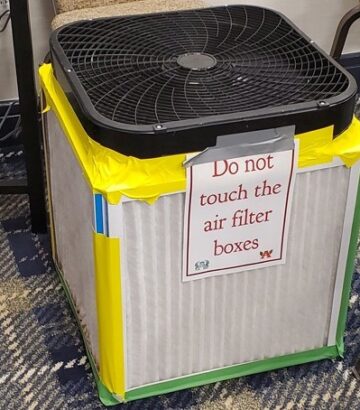
- Improving indoor air quality (open windows when possible, use HEPA filters, build a Corsi-Rosenthal box).
- Testing regularly and frequently, whether symptoms present or not, as a significant percentage of COVID infections are asymptomatic.
- Offering warmth and reassurance: illness can be frightening; care communicates safety.
Caregivers must also care for and protect themselves and often other households.
Caregiving for Someone with Long COVID
Long COVID is now one of the leading causes of new disability. Families are learning in real time how to support loved ones who may struggle with:
- Fatigue and post-exertional symptom worsening (PEM)
- Shortness of breath
- Pain
- Cognitive challenges (“brain fog”)
- Difficulty regulating heart rate or blood pressure (POTS)
- Changing symptoms of damage to multiple organs
- Sleep disruption
- Emotional distress and grief
- Any number of the 200+ symptoms outlined in the NASEM definition of Long COVID
Because Long COVID symptoms can fluctuate, caregivers help:
- Protect rest and prevent overexertion
- Track symptoms over time
- Navigate medical appointments and insurance
- Advocate when providers are unfamiliar with post-viral conditions
- Uplift identity and dignity in the face of uncertainty
This is tender work. It requires patience, attunement, and love.
The Emotional Landscape
Caregivers often balance:
- Love and commitment
- Fear and uncertainty
- Hope and grief
- Fatigue and determination
Many also face social isolation, as pandemic-safe households are often misunderstood or dismissed. Caregivers may grieve the life they had before — while building a new one around care.
If this is you:
Your work matters. Your care matters. You are not alone.
How Communities Can Support Caregivers
We honor caregivers not only with words, but with action, for families and the community.
- Offer to run errands or deliver groceries safely.
- Coordinate virtual or outdoor masked visits to reduce isolation.
- Share and amplify accurate information about COVID prevention and Long COVID care.
- Advocate for policies that protect the right to mask and ensure clean indoor air.
- Practice compassion. Lead with curiosity rather than judgment.
Resources
- WHN COVID Safety & Clean Air Guides: https://whn.global
- Patient-led and disability-led groups that offer support:
- Corsi-Rosenthal Box Instructions: Simple and effective home-built air cleaning solutions.
To Every Caregiver: Thank You
Your care is an act of protection.
Your advocacy is an act of courage.
Your commitment is an act of love.
You are holding families and communities together.
We see you. We honor you. We stand with you.