Navigating Long COVID During the Holiday Season

This post is part of a new blog series focusing on long COVID. See parts 1, 2, 3, 4, and 5.
Long COVID and associated chronic fatigue are often difficult to manage. This is especially true during the holiday season, when energy demands – physical, mental, and emotional – are at a maximum. So, as the winter holidays commence, how should long-haulers manage their illness? Writing as a long-hauler of five years this December, here are my insights on navigating long COVID during the holiday season.
Navigating Limited Energy
Pacing, pacing, pacing. For long-haulers with chronic fatigue, the importance of activity pacing during the holidays cannot be emphasized enough. As I discussed in a previous article, activity pacing (as the name implies) involves carefully pacing out your daily activities to help manage limited available energy. Pacing helps us prevent post-exertional malaise (PEM) – a significant worsening of fatigue and other long COVID symptoms following overexertion. PEM crashes can be debilitating, leaving many sufferers housebound or even bedridden with severe illness.
With long COVID, it can be easy to overexert yourself during the winter holidays. Shopping for gifts, decorating, attending parties, gathering with family, and other holiday activities require a substantial amount of physical energy. With that said, it’s critical to be aware of your limited energy levels and pace yourself accordingly. This will increase the odds that you’ll be able to actually enjoy your holidays, free of PEM.
So, to the greatest extent possible, take it easy when it comes to holiday festivities. Take plenty of breaks during activities, and stop when you feel fatigued. If you can, take a couple days to rest before a big event so you have as much energy as possible when it occurs. Additionally, don’t hesitate to ask for help if you need it; sharing the burden of holiday preparations can really help with preventing overexertion. And remember, pushing yourself isn’t worth it. You can’t participate in holiday festivities if you’re too sick to get out of bed.
Navigating Difficult Interactions with Loved Ones
In addition to its physical demands, the holiday season can be mentally and emotionally taxing, particularly for long-haulers with loved ones who still don’t understand long COVID. Ignorant exclamations of “You don’t seem sick!” and “You look fine to me!” are all too common during family gatherings around the holidays. Healthy individuals often fail to understand that long COVID is an invisible illness, and outward appearances can be deceiving.
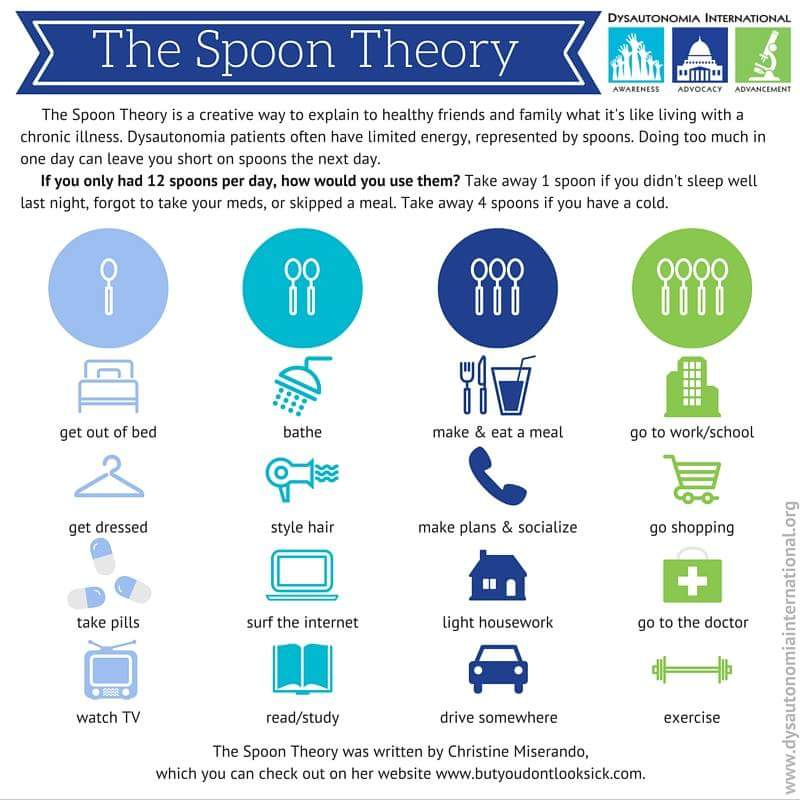
However, there are some actions you can take to improve your loved ones’ understanding of your illness. One way to help people understand long COVID, and chronic fatigue in particular, is by using the spoon theory. This “theory” is actually a metaphor that describes what it’s like to experience limited energy levels due to chronic illnesses like long COVID. MEPedia has a great webpage that breaks down the spoon theory in detail. I encourage you to use their infographics (see below) when discussing your illness with your loved ones, as visual representations can be especially useful for improving understanding of chronic fatigue.
Unfortunately, some people refuse to understand long COVID. There will always be problematic individuals who choose to believe that long COVID isn’t as severe as you say, or that it isn’t a real illness at all. You can try to provide evidence to the contrary, but you can’t always change people’s minds. If you’re dealing with these kinds of people during the holidays, know that it’s okay to step away and take a break. You don’t have to put up with people making accusatory statements about you being crazy or faking your illness – even if they’re family. Protect your peace. Remember, mental and emotional overexertion can cause PEM crashes just like physical overexertion.
Navigating Grief Around the Holidays
While the holiday season can be wonderful, it also has a habit of stirring up intense feelings of loss. Due to poor health, some long-haulers are unable to participate in holiday activities, and this can be depressing. During this time of the year, it’s okay to feel sad and even angry over missed festivities. It’s also okay to grieve the life you had before long COVID, when you wouldn’t have struggled to do everything you wanted during the holiday season. Grief is a natural and normal response to losing something you once cherished.
While it’s okay to grieve, try not to isolate yourself in your grief for the entire holiday season. Even if you spend the holidays physically alone, continue to seek human connection virtually, and reach out to friends and family for support. Video chatting is a great way to interact with your loved ones when you’re too sick to be with them in person. Or, if video chatting requires too much energy, give your favorite people a quick call or text. You’ll be glad you did.